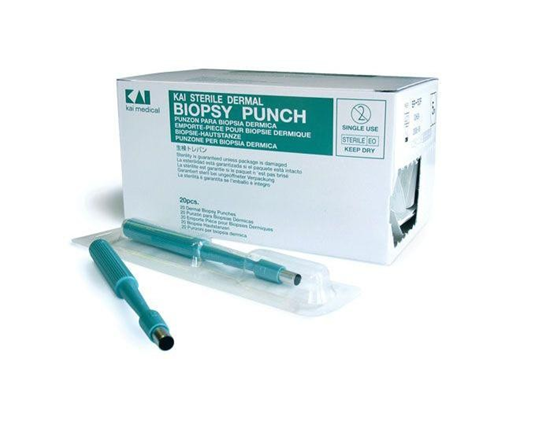
A skin biopsy is a simple medical procedure where a small sample of skin is taken to be examined under a microscope. This is typically done to diagnose or rule out a skin condition, such as an infection, inflammation, or cancer. A skin biopsy is a very useful diagnostic tool that helps dermatologists reach a correct diagnosis and plan the right treatment.
The procedure requires collaboration between two medical specialties: the dermatologist and the pathologist.
How is it performed?
There are two types of skin biopsies: the punch biopsy and the surgical biopsy.
For a punch biopsy, the dermatologist takes a cylindrical skin sample using a special tool called a punch. Before this, they apply a local anesthetic to the area so you won’t feel any pain, and they sterilize the biopsy site. The procedure is quick and is done in the doctor’s office.
A surgical biopsy involves taking a larger, deeper piece of skin. After the sample is removed, the site may require one or two stitches or can be covered with a simple bandage.
What happens next?
The sample is placed in a special container and sent to a pathology lab, where a specialist doctor, the pathologist, examines it under a microscope. The pathologist then sends a report with the results to your dermatologist. Based on this report, your doctor will inform you of the diagnosis and your treatment options.
Why is a skin biopsy needed?
A skin biopsy may be necessary when:
- There is a suspicious skin lesion that might be malignant.
- In the case of malignancy, the diagnosis helps to determine the margins for the surgical removal that will follow.
- If the lesion is benign or viral, it can be treated with cauterization or another non-surgical method.
- The diagnosis of a skin disease, such as psoriasis, lichen planus, or discoid lupus erythematosus, needs to be confirmed.
- There is an unexplained inflammation, rash, or other skin lesion that doesn’t respond to treatment.
- The effectiveness of a treatment needs to be evaluated.
What to consider before and after a skin biopsy
No special preparation is required other than informing the doctor about any anticoagulant medication you may be taking, especially for a surgical biopsy, or a tendency to form keloids. However, there is usually no need to change medication or expect side effects from a skin biopsy if some basic post-procedure instructions are followed.
Instructions after a skin biopsy:
- Avoid moisture: Try to keep the wound dry for the first 24 hours. Afterward, you can cover it with a waterproof dressing when showering.
- Prevent infection: Use an antiseptic and a healing cream as instructed by your dermatologist.
- Stitches: If the wound has stitches, your doctor will tell you when they need to be removed, usually in 7-14 days.