
Since the mid-1990s, laser hair removal has become one of the most common cosmetic procedures. Until then, the only permanent hair removal method was electrolysis. However, electrolysis was time-consuming, painful, less than 50% effective, dependent on the operator’s skill, and impractical for treating large areas.
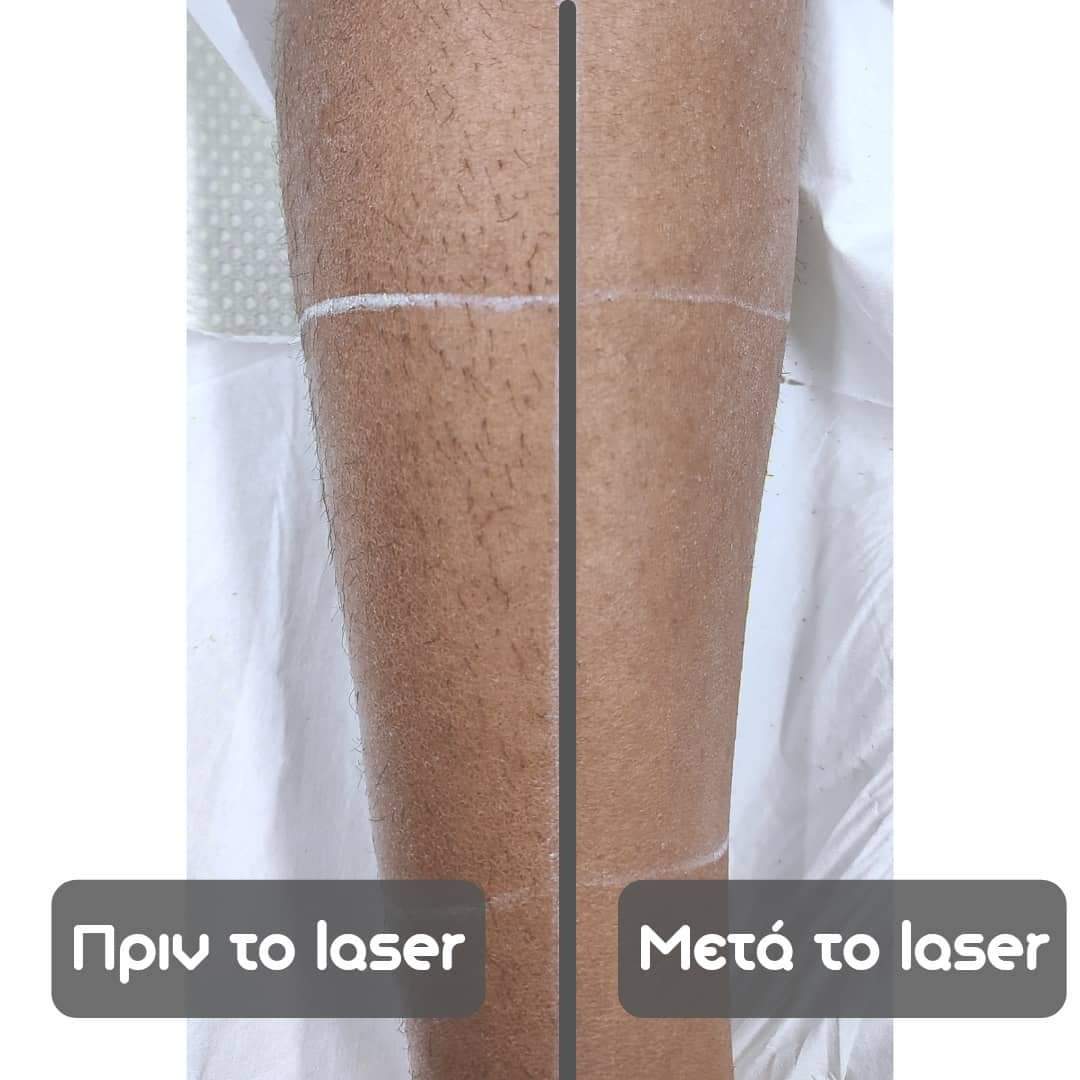
The first laser used for hair removal in a clinical study was in 1996. Since then, lasers have evolved and replaced other hair removal methods, offering permanent results with a small number of nearly painless sessions.
Today, laser hair removal is a popular and effective method for long-term hair reduction on various parts of the body. It is a medical procedure that must be performed by a qualified doctor or a professional with the appropriate training.
∇ How Does Laser Hair Removal Work?
Laser technology is based on the principle of selective photothermolysis. The laser emits a beam of light at a specific wavelength that is absorbed by melanin, the pigment that gives hair its color.
- The light is converted into heat, which is directed to the hair follicle.
- The heat destroys the hair follicle, preventing future hair growth.
- Because melanin absorbs the light, the treatment is most effective on dark hair on light skin.
- The treatment is not effective on white, blonde, or very light-colored hair, as they do not contain enough melanin to absorb the laser’s energy.
♦ Types of Lasers for Hair Removal
-
- Alexandrite Laser: This is the most common laser for hair removal. It is suitable for light skin types with dark hair.
- Diode Laser: This is effective for a wider range of skin types as it penetrates deeper.
- Nd:YAG Laser: This is used primarily on dark or tanned skin, as it can bypass the melanin in the epidermis and target the hair follicle directly.
In our dermatology clinic, we use the GentleLASE CANDELA system, a new-generation medical Alexandrite Laser that produces high-energy pulses. It emits a gentle beam of light that penetrates the epidermis and is absorbed by the melanin of the hair follicle, leaving the surrounding skin unaffected. During the treatment, the skin is protected by a cold air system. This mechanism provides protection and local anesthesia, making the treatment EFFECTIVE & PAINLESS.
⊕ Stages of the Procedure
- Initial Consultation: Before the first session, the dermatologist assesses the skin and hair type, reviews your medical history, and determines the treatment plan.
- Preparation: You will be asked to trim the hair in the area 1-2 days before the session.
- Application: During the session, the dermatologist or an experienced aesthetician applies the laser to the area, following the dermatologist’s guidance on the parameters to be used. You may feel a slight tingling or burning sensation, but modern devices have cooling systems to make the procedure more comfortable.
- Sessions: Multiple sessions are required to achieve the desired result. This is because the laser is only effective on hairs that are in the anagen (active) growth phase and have a higher melanin content.
∠ Precautions Before and After Treatment
- Avoid prolonged sun exposure for 2 weeks before the treatment and for as long as the dermatologist advises afterward.
- Avoid bleaching hair and using wax or sugar waxing for 4-6 weeks before the treatment.
- If you have a history of oral herpes, you may need to take prophylactic medication for hair removal in the perioral area.
- If you have a recent tan or dark skin, the dermatologist will determine if the treatment can be performed and with what parameters or preparation.
⊂ How Many Sessions Are Needed?
The number of sessions depends on various factors, such as:
- The body area (hormone-dependent areas require more sessions).
- The skin and hair type (the ideal combination is light skin and dark hair).
- The individual’s hormonal profile.
- The consistency of the sessions to target hairs in the correct (anagen) growth phase.
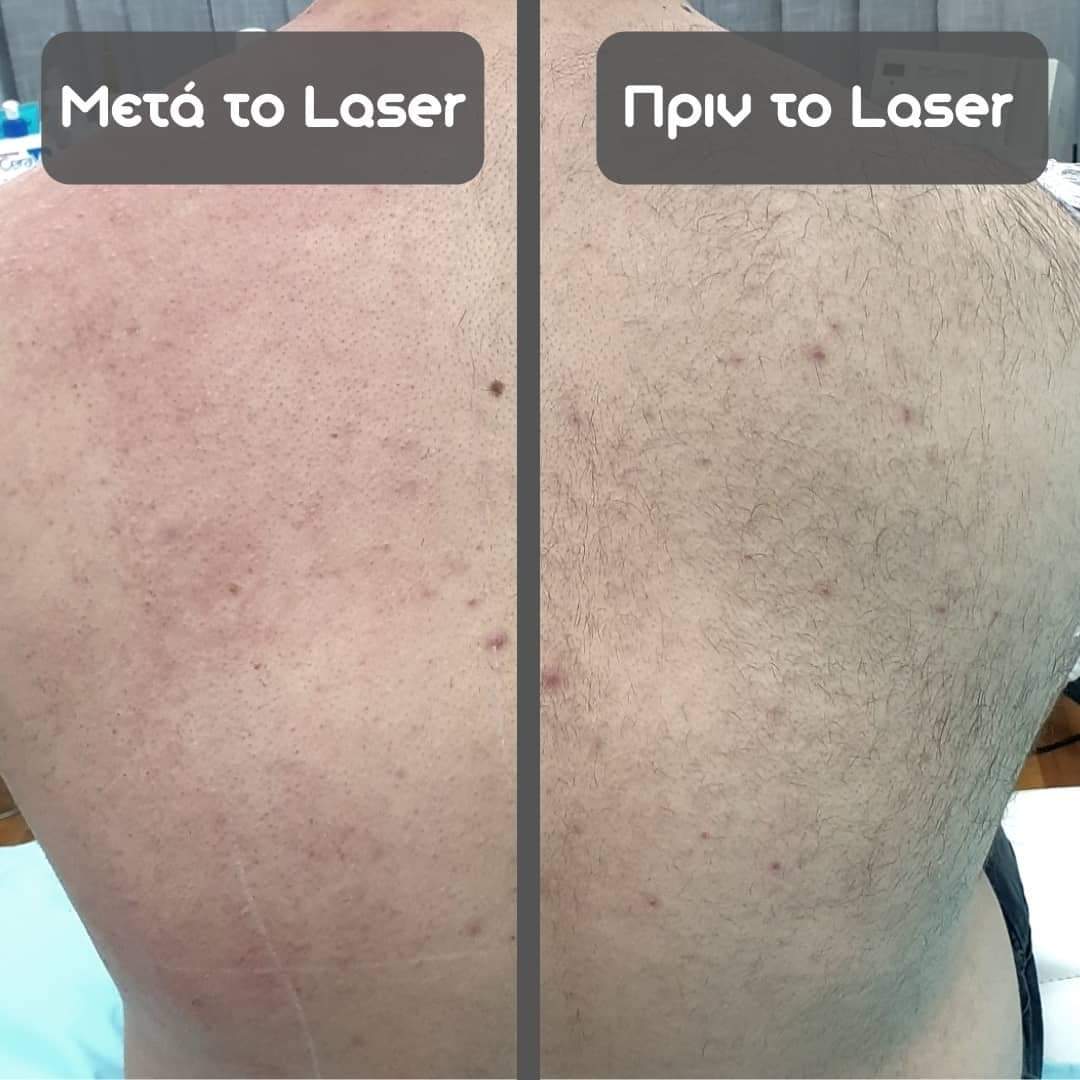
Typically, 6 to 10 sessions are required, with an interval of 1-2 months. After completing the treatment, annual maintenance sessions may be needed.
? Possible Side Effects
Laser hair removal is considered safe, but mild side effects may occur, such as:
- Temporary redness and swelling in the area that lasts from a few hours to a day. Moisturizing/regenerating creams can relieve and minimize symptoms.
- Temporary skin discoloration (hyperpigmentation or hypopigmentation). This can happen on sun-tanned skin.
These side effects are rare and can be avoided when the laser is performed under the guidance and supervision of an experienced dermatologist. If they do arise, they can be treated quickly and effectively.