
Melasma, commonly known as “chloasma” or the “mask of pregnancy,” is a chronic skin condition characterized by the appearance of brown or grayish-brown spots on the skin, primarily on the face.
What is Melasma?
It’s a pigmentation disorder where melanocytes (the cells that produce melanin, the pigment that gives skin its color) are overactive, leading to a buildup of melanin in specific areas.
The spots most often appear on the:
- Cheeks
- Forehead
- Area above the upper lip (like a “mustache”)
- Nose and chin
- Décolletage
Melasma is more common in women, especially during their reproductive years, but it can also occur in men.
Causes of Appearance
The exact causes of melasma aren’t fully known, but some factors contribute to its appearance:
- Sun exposure: Ultraviolet (UV) radiation is the most significant factor. It stimulates melanocytes to produce more melanin.
- Hormonal changes: Pregnancy (which is why it’s also called the “mask of pregnancy”), the use of birth control pills, or hormone replacement therapy can cause or worsen melasma.
- Genetic predisposition: Heredity plays a significant role.
- Other factors: Certain medications, cosmetic products containing irritating substances, as well as skin inflammation.
OTHER PIGMENTATION DISORDERS – HYPERPIGMENTATION
Besides melasma, in a dermatology practice, we often encounter other pigmentation disorders or discolorations, most commonly:
- Sun/age spots: These spots appear in older individuals, mainly in areas that have been heavily exposed to the sun, such as the hands, face, and shoulders.
- Acne scars: After acne subsides, red, pink, or brown spots may remain on the skin.
- Post-inflammatory hyperpigmentation: This appears as a result of inflammation such as acne, burns, dermatitis, or even after aesthetic procedures like laser or chemical peeling. It’s more frequent and intense in individuals with darker skin phototypes.

Treating Melasma
Treating melasma is often challenging and requires patience and consistency. Unfortunately, there is no “magic” cure that permanently eliminates it, but a combination of different methods can lead to significant improvement. The choice of treatment is very important because there’s a risk of making melasma worse.
- Prevention and basic care:
- Sunscreen protection: This is the most important factor for preventing and managing melasma. Use a broad-spectrum sunscreen with a high protection factor (at least SPF 30, ideally 50) that covers UVA and UVB daily, even on cloudy days. Reapply every 2-3 hours.
- Avoid sun exposure: Avoid the sun during peak hours (10:00 a.m. – 4:00 p.m.) and wear a wide-brimmed hat.
- Use of skin-lightening creams: Use creams with ingredients such as:
- Hydroquinone: This is the most potent skin-lightening ingredient but should be used under medical supervision.
- Kojic acid, azelaic acid, Vitamin C, tranexamic acid: Ingredients that help to depigment the skin and can be used in combination with other treatments.
- Oral tranexamic acid tablets: These have emerged as an effective treatment for melasma. They are prescribed by a dermatologist, and their use is an “off-label” indication, meaning they are used for a purpose other than that for which they were originally approved. Although tranexamic acid is considered safe in low doses, it’s not suitable for everyone as there can be side effects.
- In-office treatments:
A dermatologist’s examination precedes treatment to evaluate the depth and type of melasma and determine the appropriate treatment or combined therapeutic protocol.
- Chemical peels: The use of acids (such as glycolic, salicylic, or trichloroacetic acid) exfoliates the upper layers of the skin, reducing the intensity of the spots.
- Laser and other devices:
- Pico Lasers (Picosecond Lasers): These precisely target melanin without causing irritation.
- Q-Switched Lasers: Traditionally used for tattoo removal, they have been adapted for melasma treatment. Extreme caution is needed with the laser’s intensity (fluence), as using high energy risks worsening the melasma.
- Fractional Laser: Helps to improve skin tone and texture, reducing spots.
- Microdermabrasion and Microneedling: These can improve the appearance of melasma, especially when combined with skin-lightening serums.
- Injectable mesotherapy: The injection of special skin-lightening cocktail substances into the skin can help reduce pigmentation.
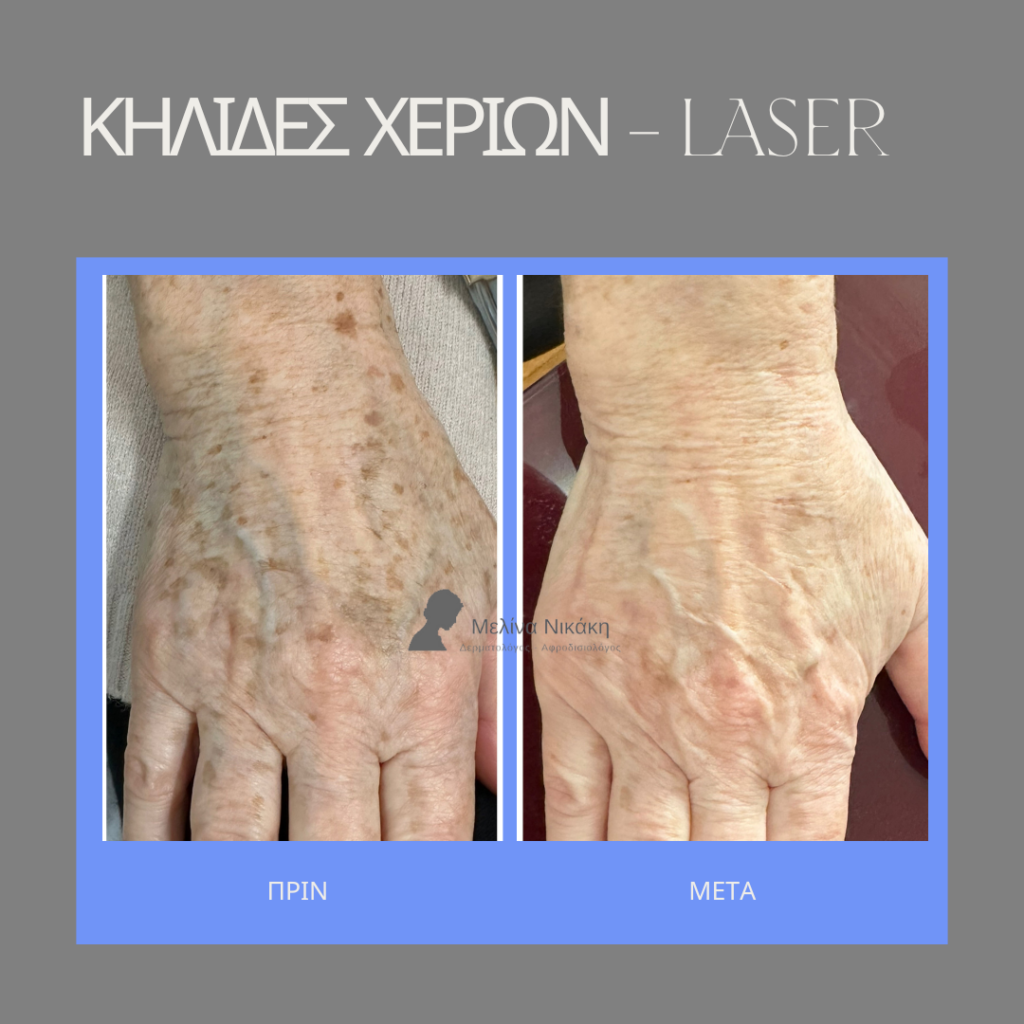
It is extremely important to consult a specialized dermatologist to determine the type of melasma (superficial or deep) and create a personalized treatment plan. The wrong choice of treatment can worsen the problem.
At our dermatology clinic, we have all the indicated treatments to choose the right one for your specific case!