
Stretch marks, or striae, are linear, atrophic scars on the skin that appear when the elastic fibers of the skin—collagen and elastin—are destroyed due to abrupt tension. Stretch marks are not dangerous to our physical health, but they can be a significant cosmetic concern and are often a source of distress.
What Are Stretch Marks?
Stretch marks appear when the skin is stretched suddenly beyond its limits. This usually occurs due to:
- Rapid weight gain or loss.
- Pregnancy: During pregnancy, the skin on the abdomen and breasts expands quickly.
- Puberty: Sudden growth in height and weight during adolescence can cause stretch marks.
- Muscle growth: Bodybuilders and athletes may develop stretch marks due to the rapid increase in their muscle mass.
- Taking certain medications: Long-term use of corticosteroids can reduce the skin’s elasticity.
Stages of Appearance:
- Red/Purple Stretch Marks: In the first stage, the stretch marks are red or purple in color, as the skin is still in an inflammatory phase. At this stage, treatment is most effective.
- White Stretch Marks: Over time, the stretch marks mature and take on a white or silvery color. At this stage, they are more difficult, but not impossible, to treat.
Treatment
Treating stretch marks requires a combination of therapies and, most importantly, patience. It’s crucial to start treatment while the stretch marks are still red.
- In-Office Treatments:
These treatments aim to stimulate blood flow to the affected area and cause a mild injury to activate fibroblasts—the cells that produce collagen and elastin—and create new connective tissue.
- Fractional CO2 Laser: This is the most effective treatment for both red and white stretch marks. The laser creates controlled micro-columns of damage in the skin, which stimulate the production of new collagen and elastin. The skin regenerates, and the stretch mark scars gradually fill in.
- Microneedling (Mesotherapy with Micro-Needles): A device with microscopic needles creates micro-injuries in the skin. This stimulates the natural production of collagen. It is often combined with the application of special serums or growth factors for better results.
- Chemical Peels: These help to exfoliate the superficial layers of the skin and renew it, improving the appearance of stretch marks.
- Radiofrequency (RF): Radiofrequency energy heats the tissues, causing skin tightening and stimulating collagen.
- Topical Creams:
- Creams with Retinoids: These can improve the appearance of stretch marks, especially in the early stages, as they stimulate collagen production.
- Creams with Hyaluronic Acid, Vitamin C, or Peptides: These help to hydrate the skin and improve its elasticity, but they are usually not sufficient as a standalone treatment.
Important Note: There is no product or treatment that can make stretch marks disappear completely, especially once they have turned white. However, modern technologies can make them much less visible and significantly improve the skin’s texture. Treatment must be performed exclusively by a dermatologist, who will choose the appropriate treatment plan based on the age, color, and extent of the stretch marks.
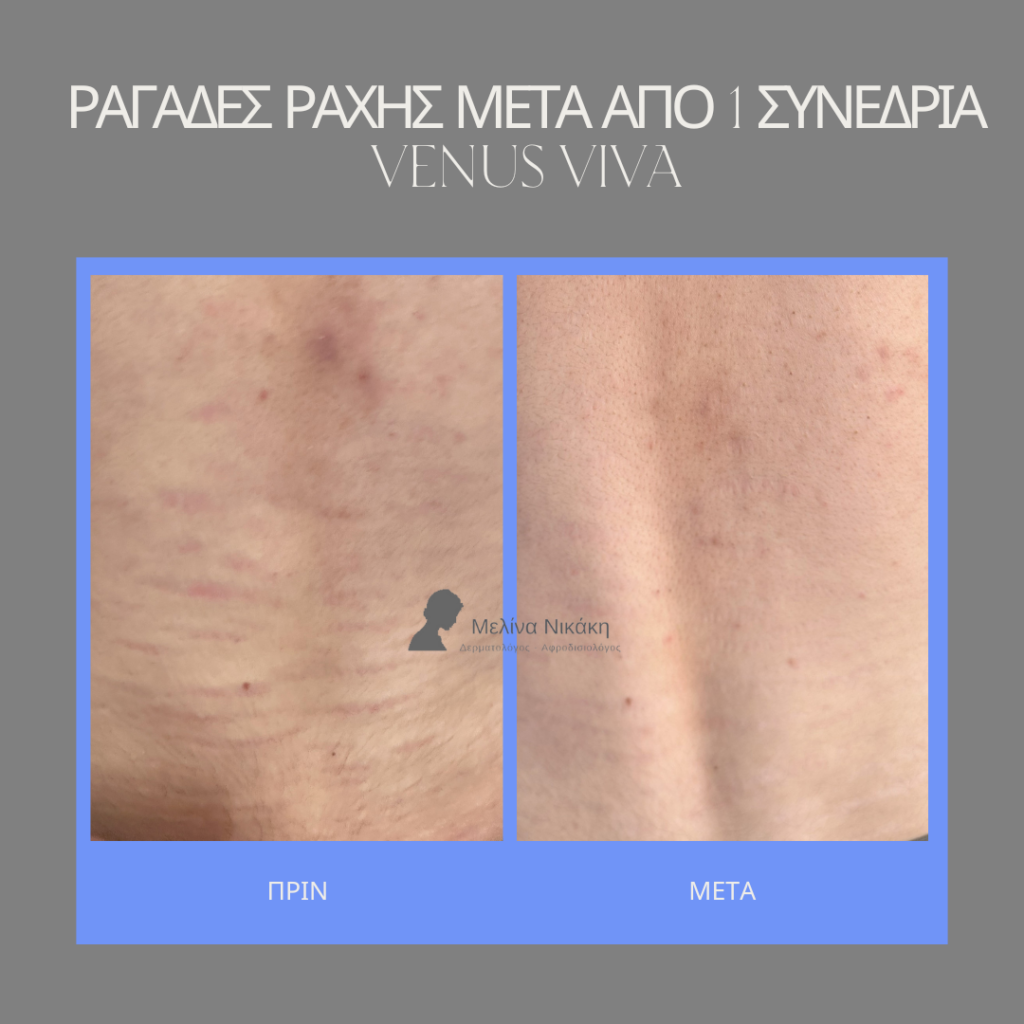
In our dermatology clinic, we have successfully treated stretch marks, even white ones, many times with the help of the VENUS VIVA device, which provides effective results even from the very first session!