
Turn back time
⇒What is it?
Hyaluronic acid is a substance naturally present in the human body, serving as a natural substrate for tissues that fills intercellular spaces, moisturizes, absorbs shocks, and provides an elastic framework to support collagen and elastin. It also regulates inflammation, wound healing, free radical scavenging, cellular proliferation, and cell motility. In our skin, it’s what provides hydration and volume.
Synthetic hyaluronic acid is a pliable, non-animal-based gel available in a pre-filled, sterile syringe. This cross-linked hyaluronic acid essentially mimics our natural hyaluronic acid that already exists in our body.
Indications
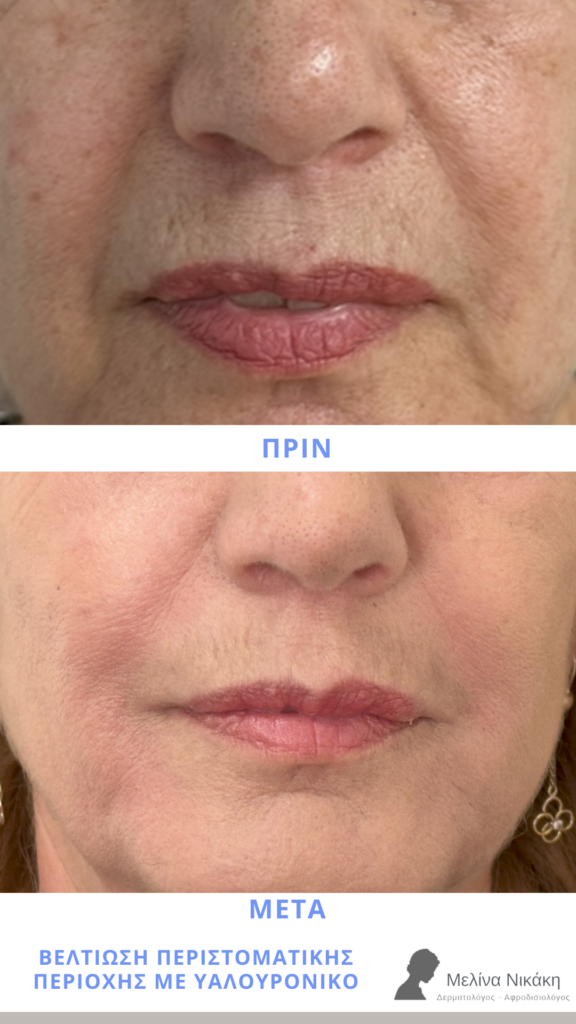
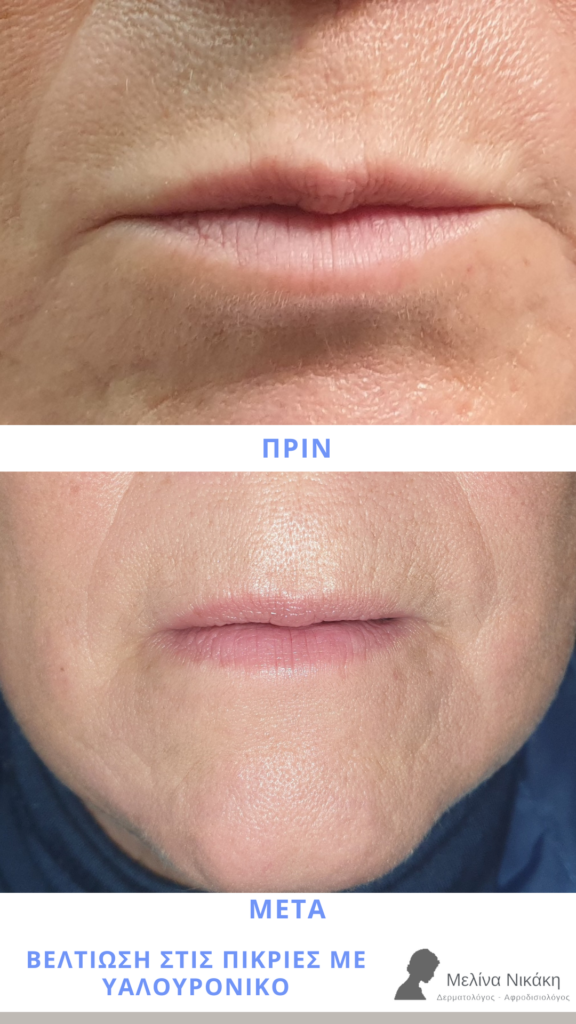
- Correction of wrinkles (e.g., nasolabial folds, marionette lines, perioral wrinkles)
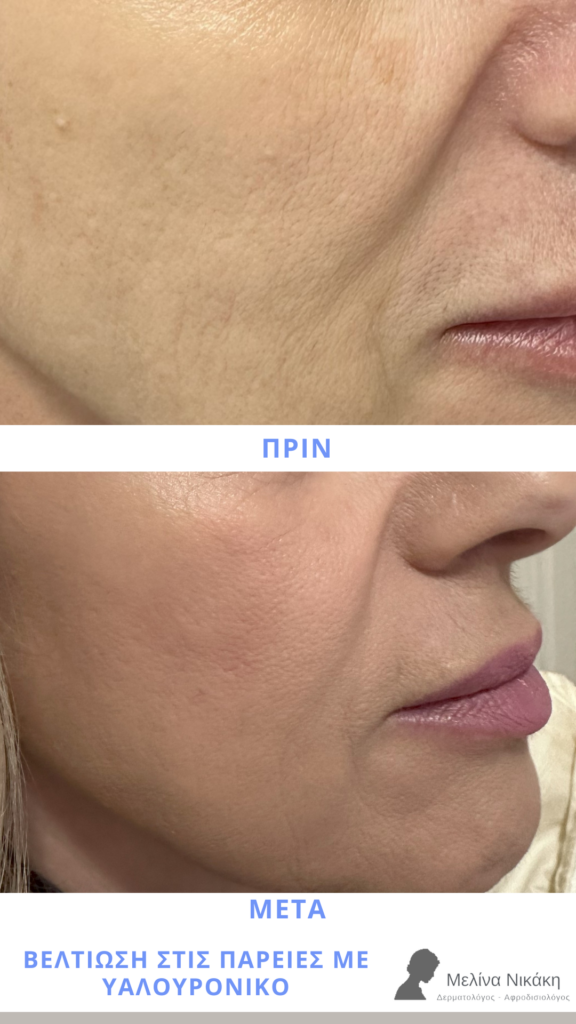
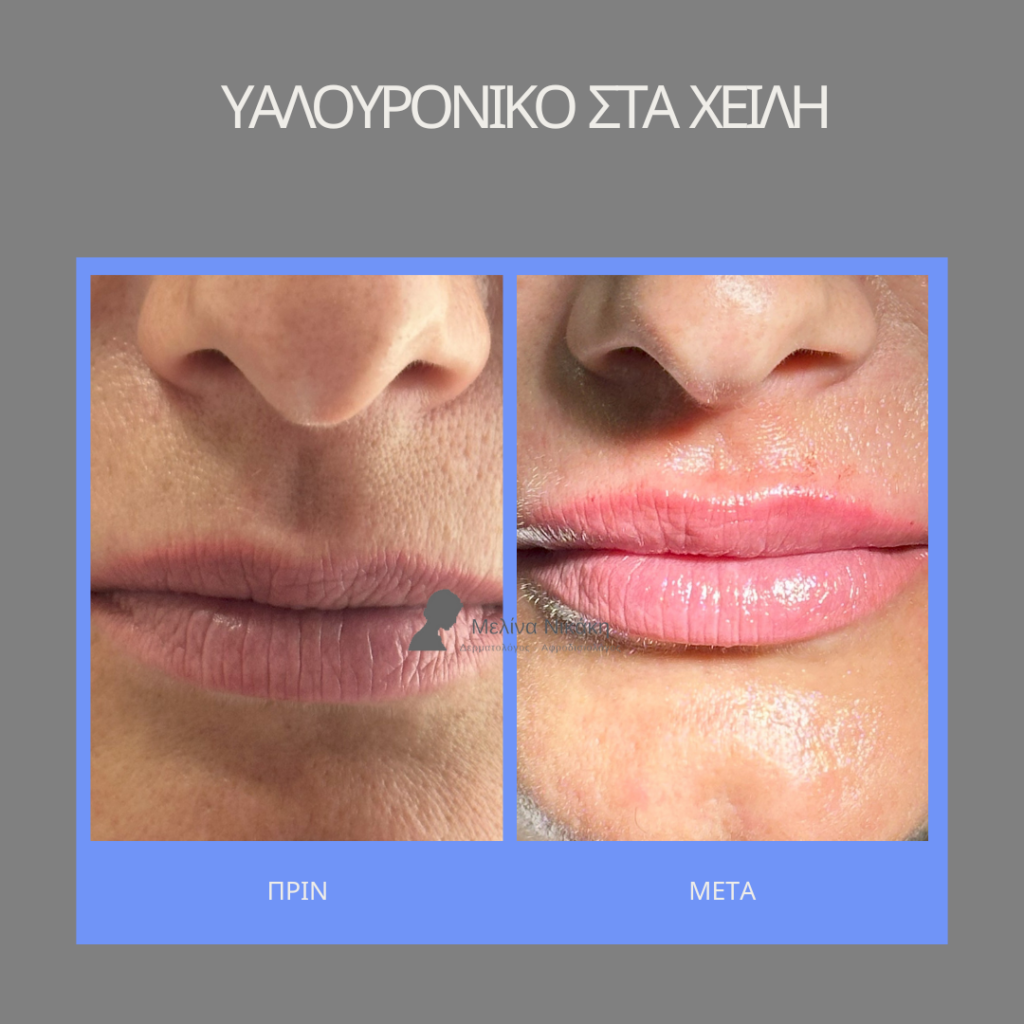
- Volume restoration (lips, cheeks, infraorbital tear troughs, chin, temporal area, dorsal surface of hands, buttocks)
- Facial rejuvenation, contour improvement
- Correction of atrophic scars
- Aesthetic nasal correction
Areas of Application for Aesthetic Reasons:
- Face
- Neck
- Hands
- Body
Practically, it can be used anywhere there is a need for volume restoration; only the type of hyaluronic acid used is different.
Contraindications
- Pregnancy and breastfeeding
- Immunocompromised individuals
- Autoimmune diseases
⇒Does it Hurt?
The material is placed with the help of a needle or a blunt-tip cannula. Although materials containing lidocaine result in very good tolerance, when a topical anesthetic cream is used beforehand, the treatment becomes almost painless!
Adverse Reactions
The placement of HA is a medical procedure that can cause adverse effects. We distinguish between:
- Immediate complications (0-2 days) such as redness, tenderness, pain, bruising, hematoma, and edema in the application area, which subside within 3-5 days with the help of arnica and ice packs.
Beyond these common complications, a bluish discoloration of the skin (Tyndall effect) may occur due to superficial placement in the tear trough area, which is treated topically with hyaluronidase. A rare but serious complication is vascular occlusion or compression of vital vessels, which can lead to skin necrosis and, in extremely rare cases, blindness, requiring immediate treatment.
- Early complications (3-14 days) are nodules, both inflammatory and non-inflammatory (from excessive material deposition or superinfection), and angioedema (usually due to a superficial injection or an immediate allergic reaction to the material).
- Late complications (14+ days) that manifest as inflammatory nodules, granulomas, or localized hardening of the skin due to a type 4 hypersensitivity allergic reaction. With the knowledge and guidance of the treating physician, complications are managed with hyaluronidase, antibiotics, corticosteroids, or a combination thereof, as appropriate.
⇒ How Long Does the Result Last?
The result is immediately visible, and its duration averages 6-12 months, but in some cases, the duration may be shorter (in the lips, about 6 months) or even longer (in the cheekbones and for volume restoration, 18 months or more). The duration depends on age, skin type, application area, injection technique, as well as the quantity and quality of the material. Adjustments and follow-up help to maintain the desired result.
Ø What Should I Be Careful About if I Plan to Undergo a Hyaluronic Acid Injection?
- Do not have dental procedures 15 days before and after the injection.
- Do not take medications that increase bleeding tendency (aspirin, anticoagulants) in the previous 7-14 days, as well as non-steroidal anti-inflammatory drugs and multivitamins containing vitamins E and C.
- Do not consume alcohol or engage in any sports 24 hours before and 72 hours after the injection.
- Take arnica as a preventative measure for sensitive skin prone to bruising, both before and after, if bruising or hematomas appear.
- Avoid exposure to very low (below 0°C) or high temperatures (sauna) for 15 days after the injection.
- Avoid air travel for 72 hours after the injection.
- Make sure that a detailed medical history is taken and you are informed about the expected outcome before you proceed with this treatment.
- Be aware of the hyaluronic acid product that will be used on your skin and ask for the sterile package to be opened in front of you.
- Many hyaluronic acid products are available, but not all are certified and safe. Never choose based on price! A cheap offer, among the many we find online, should concern you! It will cost you more to treat the complications that may arise from a material of questionable quality and origin, or an injection performed by a non-physician or a non-specialized physician.
- Last but most importantly, choose your doctor. Select a specialized and experienced physician for a safe injection and a good aesthetic result.
⊗ Why Should I Get Hyaluronic Acid?
- Because it is a popular and long-tested treatment that offers an immediately visible result that lasts.
- Along with Botox and certain laser treatments, it is one of the most important methods for the prevention and treatment of facial aging, resulting in a large increase in its use in recent years.
- It offers a bloodless and relatively painless improvement or perfection of facial features with minimal downtime.
- Increasingly improved techniques now offer a 3D reconstruction of the aging face with volume correction where needed without surgery (hyaluronic acid facelift).
- It offers prevention and improvement of facial proportions and skin rejuvenation even in younger ages who do not have a problem with deep wrinkles.
- It is for women and men and provides a completely natural result with minimal adverse events.
…as long as it is done by a doctor with a deep knowledge of facial anatomy, a sense of aesthetics, harmony, and moderation, and is an expert on the materials they use and modern injection techniques.
In our dermatology clinic, treatment is always personalized. The dermatologist informs the patient about the expected results, uses the best and most certified and safe hyaluronic acid products on the market (such as Juvederm, Restylane, Teosyal, Pluryal), and with knowledge gained from many years of experience and continuous education through certified hands-on workshops and participation in conferences