
Electrosurgery, also known as diathermy or electrocautery, is a widely used method in interventional dermatology. It’s a procedure that uses high-frequency electrical current to cut, cauterize, or destroy tissue.
⇒ How it works
Electrosurgery is performed with a special device that generates high-frequency electrical current. This current is channeled through a specialized head (electrode) that makes contact with the skin lesion. The tissue’s resistance to the electrical current creates heat, which destroys the cells of the lesion.
There are various types of electrosurgical techniques, depending on how the current is used:
- Electrodessication: Used for drying and dehydrating superficial tissues, which destroys the lesion.
- Electrocoagulation: Used for clotting blood in vessels, which controls bleeding.
- Electrosection: Used for cutting tissue, acting like an electric scalpel.
The procedure is usually performed in the dermatologist’s office with local anesthesia to ensure the patient feels no pain.
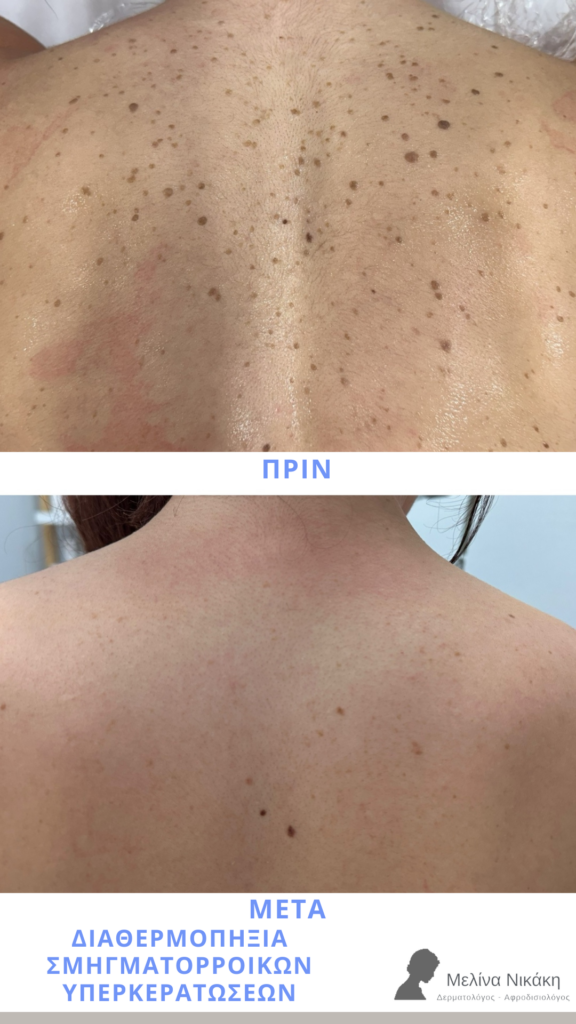
? What does it treat?
Electrosurgery is used to treat a wide range of skin problems, mainly benign lesions, such as:
- Skin tags
- Warts
- Genital warts
- Seborrheic keratoses
- Molluscum contagiosum
- Hemangiomas and pyogenic granulomas
- Xanthelasma (cholesterol deposits on the eyelids)
- Some types of cancerous lesions (e.g., small basal cell carcinomas), in combination with other techniques like curettage.
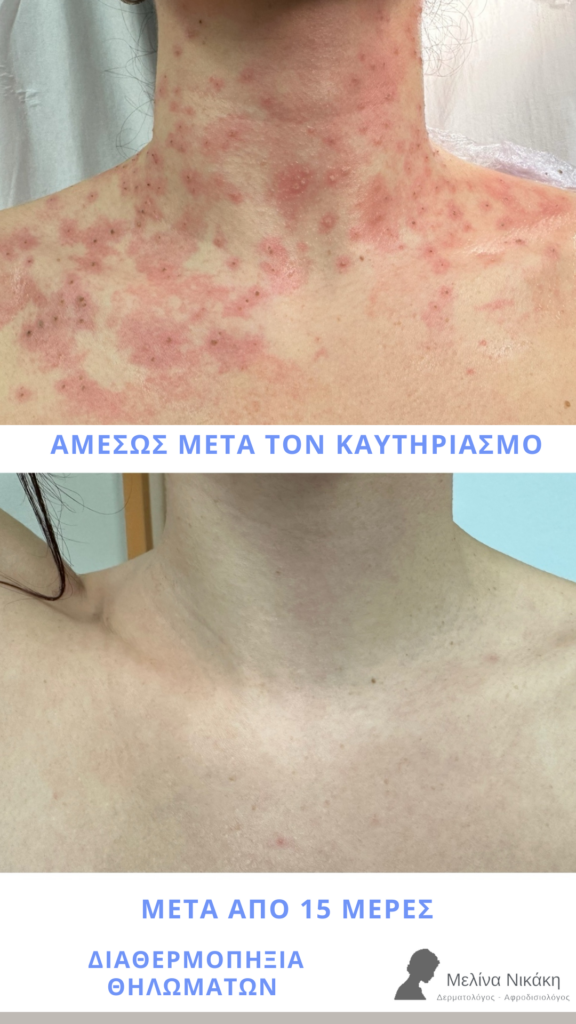
♦ Advantages
- Precise and controlled tissue destruction: Allows for the removal of the lesion with minimal damage to the surrounding healthy tissue.
- Hemostasis: Cauterizes blood vessels, reducing bleeding during the procedure.
- Quick and simple procedure: Performed in the office and often does not require stitches.
- Lower risk of infection: The heat of the current sterilizes the area.
√ Post-diathermy instructions
- Do not wet the area for 24 hours.
- Use an antiseptic or healing gel for 7-10 days until complete healing.
- During the healing period, do not use a sponge on the treated areas when bathing and avoid local friction, for example, from necklaces (for skin tags on the neck).
- Avoid sun exposure in the following days to prevent the risk of post-inflammatory hyperpigmentation, which are unsightly spots at the cauterization sites.
As a procedure, it is completely safe and does not leave scars when performed by an experienced dermatologist and when the post-procedure instructions are followed.