
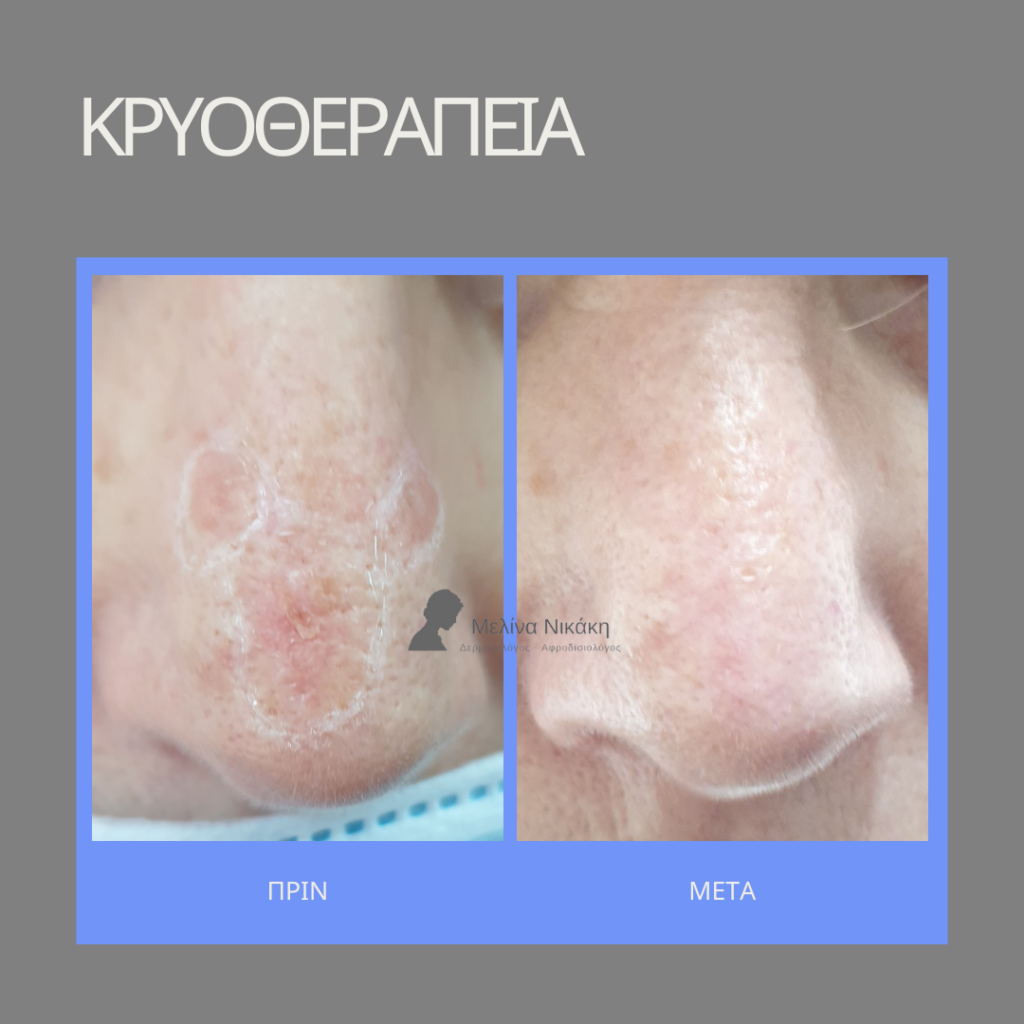
Cryotherapy or cryosurgery is a therapeutic method that uses very low temperatures to destroy pathological tissues. In dermatology, its most common application is the use of liquid nitrogen, which has a temperature of -196°C (-321°F).
How it works
The dermatologist applies liquid nitrogen directly to the lesion using a special spray, a cryoprobe, or a cotton swab. Parameters such as cooling time and cooling cycles are important for the effectiveness of the treatment and vary depending on the lesion being treated.
The intense cooling causes:
- Destruction of tissues through freezing and thawing.
- Thrombosis of small vessels: This cuts off the blood supply to the area, leading to tissue necrosis.
- An immune response.
Subsequently, the lesion detaches and falls off, leaving healthy skin underneath.
Indications
Cryotherapy is an effective method for treating a wide range of skin lesions, such as:
- Warts(genital and non-genital)
- Molluscum contagiosum
- Skin tags
- Seborrheic keratoses
- Actinic keratoses (precancerous lesions)
- Some types of superficial carcinomas (e.g., superficial basal cell carcinoma).
- Keloids
- Venous lake
- Mucous cyst
- Granuloma annulare, among others.
Contraindications
There are cases where cryotherapy is not indicated, such as:
- History of cold sensitivity: Individuals with Raynaud’s disease or cryoglobulinemia, where exposure to cold causes severe vascular reactions.
- Collagen diseases
- Taking immunomodulatory treatments
- Multiple myeloma
- Pyoderma gangrenosum
- Hemodialysis
- Severe and unregulated diabetes mellitus (a relative contraindication)
- Dark skin (phototype V-VI): There is an increased risk of permanent hypopigmentation (discoloration) of the area.
- Lesions near nerves: Cooling can cause temporary or, more rarely, permanent nerve damage, leading to numbness.
- Suspicion of malignancy: If a lesion is suspected, it is better to perform a biopsy for histological examination, as cryotherapy destroys the tissue and does not allow for examination.
- Aggressive forms of carcinomas: It is not the appropriate method for nodular basal cell or squamous cell carcinomas.
Side Effects
The side effects of cryotherapy are usually mild and temporary:
- Pain: A stinging or burning sensation during and for a short time after application.
- Swelling and redness: The treated area may swell and become red in the following hours or days.
- Blister: A fluid-filled blister often forms, which can be hemorrhagic. This is a normal stage of the healing process.
- Scab formation: The blister breaks, and a scab forms afterward.
- Discoloration: Hyperpigmentation (darker color) or, more often, hypopigmentation (lighter color) may appear at the site of the lesion, which can be permanent.
- Scar: Although rare, a small scar may remain, especially if the lesion was large or deep.
The doctor will give you specific instructions for caring for the area after treatment to minimize side effects, which are temporary and mild.